Revise your story

I’ve written about finding myself in a hole, here, feeling the darkness, and climbing out, step by step. Some of the progress was circumstantial: my situation changed, and with those changes, my outlook looked up.

But it wasn’t all that tidy. Long before the big changes occurred, I began stepping toward righting myself. Why? Because at the time, I didn’t know how, or if, life would hand me the turnaround I wanted, needed.

And if not? Then what?

I couldn’t stay where I was. I began the trip back to normal without knowing what life would look like. I just knew I couldn’t stay in the hole, in the dark.

These are the next things I did, after recognizing I had to begin the climb on my own. If you find yourself in a similar hole, maybe some of these steps will help. Nothing here is magic, or ground-breaking. But when I’m struggling, it helps to have a path laid in front of me. That’s all I’m offering here…just outlining steps so you don’t have to do it yourself. No right, no wrong, just suggestions.

  • Make a plan, whether big or small. To come out of the darkest time, I had to have a plan. I couldn’t be sure what I would do eventually, but I had to start working toward next. And that’s what I would suggest for anyone trying to see daylight. Whether you’re between jobs, relationships, coming out of depression, trying to adjust to a new place or time in life…make a plan.

But be easy on yourself. Recognize that when you’re in flux, a lot of what you’re working with may change. Will change.

When I find myself in disarray, I need to rebuild structure and order in my life. I like to set goals for myself, targets that are reachable, but nothing that demands action tomorrow. Time pressure isn’t helpful in a vulnerable state.

There are reasons for this. Setting goals that are a few weeks, or even months, in the distance, gives me something to work toward and plan for. But if you’re in a fragile place, you don’t need the pressure of immediacy. I’ve found this type of medium-range goal planning is comforting.

By putting my goals a few weeks out…or even a little longer, if that’s feasible…I give myself something positive to work toward, without stressing myself in the moment.

This type of planning allows time for other events/forces to unfold.

The last time I found myself in limbo, I did exactly this. I put some targets on a calendar and made a tentative plan, based on what I would do if…

If certain things worked out this way, then….

If things worked out that way, then….

By thinking through options and possibilities, I worked through scenarios that helped me plan.

  • Share your plans with a person or two you trust. Ask for feedback. Having someone think with you is helpful…helps you see possibilities you may be missing, and can be a reality check. This is especially important if you’re in unfamiliar life territory.
  • Write your goals. Make lists, keep a journal. Writing is good therapy, and putting plans down on paper or on screen will help you focus. It’s also useful to be able to look back, to see progress, or to remind yourself of thoughts or plans you lose sight of.
  • Mark any significant dates for the next year on your calendar, and use those as sign posts for progress, for interaction, for incentive. When you see a date on your calendar a couple of months out for meeting family, for attending a special event, for something you can be excited about, the calendar gives you hope. Don’t discount this as reason to get through the day, week, or month. Let your calendar be a daily reminder that life is happening all around you, and you have a part to play.
  • Decide what you want to change, and what you can change. Is it location? Job? Habits? Name the goals, then put realistic dates on your calendar…when will you achieve your goals? Or what stages will you mark as advancements? Or achievements?
  • Learn a new skill. Nothing boosts the ego and wakes up the mind like a challenge. This is a great way, and a focused way, to work toward life goals. Learning a new skill can help you step toward your goals. Join a class if possible. Leaning with a group is a good way to connect with kindred spirits, and can give you new sources of support.
  • I am sold on the power of doing something for someone less fortunate, or for a good cause. Nothing makes you feel better than contributing. Again, this will work only if you’re healthy enough in mind and body to get out and connect with others. Take this slow. Don’t overcommit your time, money, or self. If you have healing/growing/recovering to do, you need to protect yourself.
  • Find outlets for creativity, and for physical activity. You need to nurture your body and your spirit. Don’t neglect your need to be active, and to exercise your creativity. Whether you’re inspired to create, or driven to release your energy, you’ll benefit from movement and stimulus. Nothing is more deadly than sitting still and drowning in despair.
  • Find someone to be accountable to. You could make this a mutual thing, or just ask someone to provide this for you. Knowing that you’ve committed to sharing your progress will give you another incentive to make progress. Decide how often you’ll connect, and any other parameters you want to set. Be serious about accountability; it can be a wonderful aid to get you through difficult tasks.
  • If you can afford it, work with a life coach. Life coaches are not therapists. The function of a life coach is to help you find your voice and motivation, and to hold you accountable to the goals you set. In my opinion, you want someone who will hold a mirror to your life, and be a voice of encouragement. I would stay away from the drill sergeant type. You want someone who will be honest and firm with you, but you don’t need someone who will use guilt or other negative styles of communication.

I didn’t suffer with clinical depression, and I can’t address that condition. Clearly, individuals with mental health issues need more than a list of helpful suggestions to right themselves. 

But you don’t have to be clinically depressed to struggle, to feel lost, to feel stuck, and sad, and down. That’s the mindset I’m addressing.

Even if you seek help from a coach or counselor, you have to begin with yourself. Recognizing you have to do something different, then taking the first small steps to begin…that’s the hardest part. Finding your resolve, getting off the sofa or out of the bed, beginning

You can do it. Only you can do it.

I’m not a counselor, but I’ve been there, in the hole. I know what it’s like to sleep poorly, waking up with thoughts racing every hour or two, to dread going to work or getting out of the house because you feel like you have to put on “the face” of normalcy. I know finding the desire to do anything can seem like a mountain.

It is a mountain. But you can climb it. If you can’t find the heart to do it for yourself, find someone else who inspires you, or choose someone you want to inspire. Do it for your spouse, your kids, your legacy, if you can’t do it for yourself.

Sooner or later, you will be doing it for yourself. You will be inspired, and inspiring. You’ll have a story to share, a success to celebrate, and a renewed life.

No one can predict your outcome. No one else can write your story. Find your brave, even if it scares you. Especially if it scares you. Open up to those you trust. Give others opportunity to help, to support and encourage you.

Hear my voice, if you can. That’s one of my goals…I want my voice to be an encouragement. Not because I have it all figured out, but because I know how hard this is. Eventually, you’ll know you can do it, because others have done it. You can be strong, you’ll find your way. And in turn, you will be a voice of encouragement.

Each of us has a place, each story has value. If your story has derailed, dig deep. Begin your revision. This is my time, and this is your time. ~ Sheila

Other people are going to find healing in your wounds. Your greatest life messages and your most effective ministry will come out of your deepest hurts. ~ Rick Warren
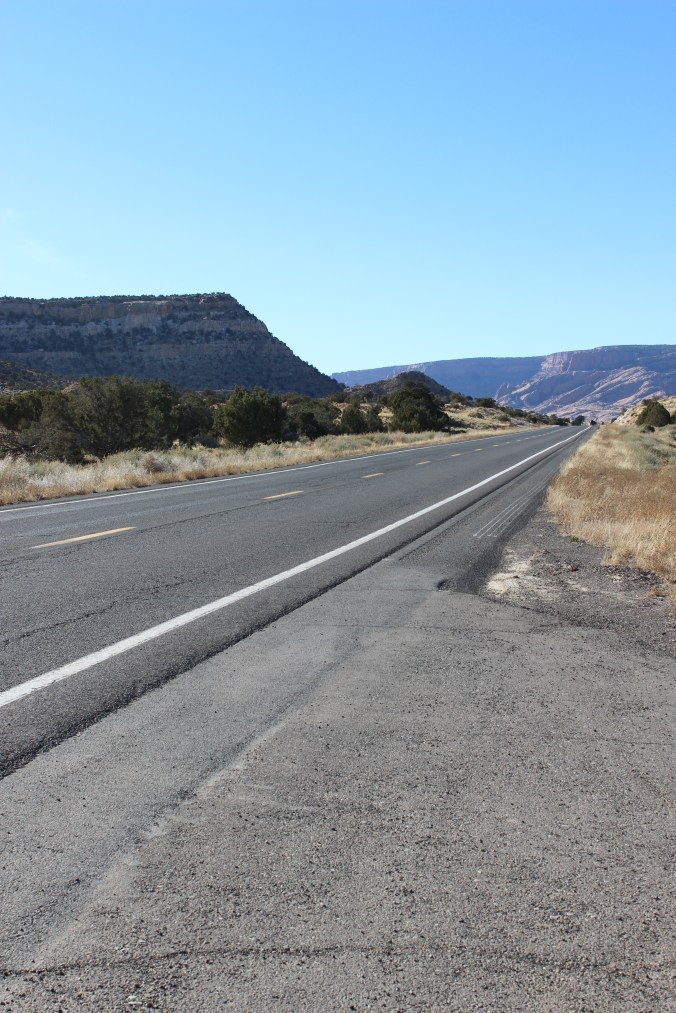


View of the road

When I was a kid we did road trips. Lots and lots of road trips.

IMG_0107

I mostly had my nose in a book on those journeys. My dad always had music on, my mom always brought snacks, and the kids brought books.

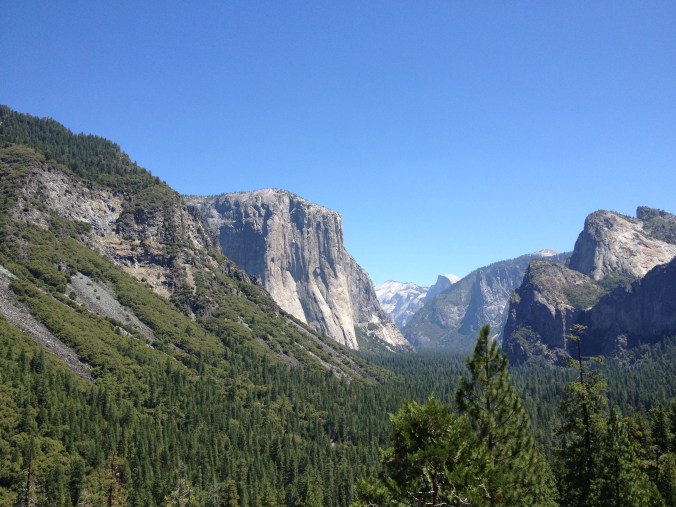
My dad loved national parks, and if our travels took us anywhere near a park, we had to stop.

IMG_0239

Had to.

Driving anywhere can be an interesting experience if you’re paying attention.

IMG_0247

IMG_0261

But in those days I rarely looked up. I sat in the back seat, or even in the “way back” of the family station wagon. The view was mostly a sibling’s profile, also buried in a book. I remember my dad getting irritated with us, that we were missing the scenery he was so enchanted to see. He was hauling us all over the country, and we might as well have been at home.

Sometimes there’d be a sight to bring us to the surface, out of our respective novels, and we’d stare out the window at a passing scene, or get out of the car and troop into a national park headquarters, dutifully learning about the history or geography, or whatever made this particular spot noteworthy.

IMG_0275

Now, a few decades later, I sit in the front. I never read. I mostly stare out at the landscape, passing by at 50, 60, or 70 miles an hour. Sometimes we pull over so I can snap a photo or two, or twenty. I’m always on the watch for a great diner, local color, a beautiful view, a charming town.

IMG_0082

IMG_0113

I love road trips.

IMG_0617

Sometime between childhood and now I grew to appreciate the freedom and the variety of driving. I never get bored, and it almost doesn’t matter where we begin, or where we end. I just love the whole thing, from first to last.

I fly a lot these days, for work, and sometimes for pleasure. Sometimes the only way to get where I’m going is on a jet.

IMG_0424

IMG_0226

But if I have a choice? I’ll pick the road, every time. There’s nothing like it, and never will be. The great American love story is with the road, and I’m happy to be out there, wondering what’s around the next bend, where we’ll stop to eat, what new thing we’ll see.

IMG_0319

IMG_0740

It is an amazing country, and a gorgeous one.

Driving today, I thought about my dad. I wish I could tell him: I learned to look up. I learned to see what’s in front of me, to appreciate the beauty, the romance, the wonder of the road.

IMG_0718

IMG_0112

I think he’d smile, and be proud I finally got it.

Cautionary Tale

Driving through the mountain west, sun shining on sparkling snow, white contrasting with the grays and reds of mountain rock, I’m captivated.

IMG_0087IMG_0096

IMG_0098

I’m enchanted by beauty and nature, the privilege of seeing this land that’s so scarcely populated. The footprint of humanity is small here.

This is bliss, this cold December day a time of joy and sweetness.

A year ago I could not have imagined this day, full of light and companionship, easy silences punctuating quiet talk during the drive.

IMG_0101

IMG_0108

I thought today: if I could have known, a year ago, this day was coming, would it have made a difference? It would have made it easier to work though a hard time of life.

But maybe working through the hard time, with no certainty of good to come, made today possible?

IMG_0109

I don’t know, can’t know, exactly what forces sculpted the days and weeks between last year and this. I know a little of the changes that occurred, that made a difference. But I don’t know all.

This is what I do know.

The hard times in life have purpose. Whatever the hardship is, working through it, surviving it, learning from it, gives rich color and depth to time that follows.

I haven’t experienced every sorrow life has to offer, thank God. But I’ve been through some of the fires. The fires taught me no life is immune or safe. Something touches each of us, either directly, or through someone we love.

The hard times taught me patience and perseverance. I learned to let time do some of the work for me.

I learned to face hard truths with honesty.

I learned to forgive myself and others for mistakes.

I learned to value the pain of others because of my pain. When you really understand the hurts and losses of life, your ability to empathize grows exponentially.

Last year was a year of loss, change, upheaval, conflict, depression, uncertainty.

It wasn’t the first time I’ve passed through such a season. Life has handed me other losses, taken my joy for a time.

And that is life. No one is immune.

I’m reminded, afresh, that we all weather seasons, and change.

Each time I’ve experienced a time of darkness, I’ve learned from it. It’s slow at first…whatever knocks you flat, takes you out, leaves you reeling…those forces don’t retreat easily.

Loss, death, illness, tragedy, conflict, displacement…there’s a continuum of pain, and ability to recover.

I couldn’t change the fact of my father’s death. I had to reach acceptance.

I was able to reclaim my marriage. I had to allow time for growth, and perspective, for healing.

This is my path, steps to return to joy.

  • Remember to breathe. It’s ok to grieve and to shut down for a time. But you must breathe, you must do a minimum to maintain your physical self, with rest, with food, with action.
  • As soon as you can, feed yourself hope. Since the beginning of people, hearts have broken, loss has devoured. You will likely recover, overcome whatever is hurting you. There are lives all around that testify to the power of the human spirit to survive, conquer, thrive. If others can do it, you can too. Tell yourself that. Say it even when you don’t believe it. Say it until you can believe it.
  • On days that you can’t do anything positive for yourself, at least do no harm. Don’t make big decisions, don’t rush into anything, don’t burn bridges today that you may need to cross next week.
  • Look for the unexpected. Each time I’ve experienced a trough of life, there’ve been good things come to me, unexpected lights to give me a path back to life. The unexpected may be a circumstance, an insight, a new friend…anything. But you have to be open enough to receive. Don’t block help or hope.
  • Forgive: yourself, others, mistakes, misunderstandings…get the negatives out. Holding it inside only hurts you. You don’t have to share with anyone else unless you choose. But even talking out loud, ranting in private, will give you release, and let you find the words you need to say. It gets easier with practice. If you can’t say the words, write them. Just get them out one way or another.
  • Be kind to yourself. Whatever you can do to soften and soothe and heal, do that. But, don’t take a positive and turn it to a negative…don’t comfort yourself with so much “comfort” food that you gain weight, or run up debt trying to buy your way to happiness. Keep your kindnesses positive.
  • Give yourself and the situation time. Lots of time, if you can. Time can’t heal everything. It can’t replace every loss, and it isn’t the cure for all illness. But it can do a lot, if you let it. Practice patience, with yourself, the circumstances, with others.
  • Make a promise to yourself. Promise you’ll learn from this, that you’ll be stronger and better for having this experience. Make sure you keep it.
  • Use your story. Your story will be a powerful way to connect with others going through a similar experience. And believe me, whatever you’re facing, someone else is facing too. You don’t have to share everything to share something. You’ll find solace and give it too, by opening up, when the time is right. Promise yourself that you’ll do what you can to add light, not dark, because you went through hardship.
  • Find something to be grateful for. Even the smallest thing you can name counts. Keep adding to your list. Find a beautiful image, a book, a song, a view, a friend, a pet, to focus on.
  • Don’t grow bitter. Bitterness poisons life, and nothing is worth that. If you’re mourning the loss of a loved one, honor them by returning to life. If you’re mourning something else in your life, honor yourself by refusing to give up. Know that one way or other, soon or later, you’ll sing again, be joyful again.
  • Seek professional help if you can’t find your way. It’s out there, and it will be worth it. Sometimes the best thing we do for ourselves is admit we can’t do it alone. That can be an act of bravery, and your first step away from the dark.

I had professional help this year, and it changed everything. You don’t have to commit to long term counseling or therapy to reap great reward. Sometimes you just need a jump start. Or if you need ongoing help, the sooner you begin, the better.

I’m thankful for the lessons learned and road traveled. And I look for ways to share, to give back. I’ve promised myself that good will come of my journey, and I mean to see that promise come true. It wasn’t my goal in life to be a cautionary tale, but it seems to be my fate.

Well, so be it. We give as we can, and from what we have. If I can help anyone by encouraging with my words, I’m content.

No books for me

Tonight I wandered aimlessly through Barnes and Noble, looking at titles, thumbing through pages from favorite authors. The covers were enticing, the smell of books and the order of shelves and aisles calming and soothing. I love the quiet and sanctity of bookstores.

I wandered through the store and finally left with nothing.

Not.One.Book.

I’ve been an avid reader as far back as I can remember. I would rather read than watch anything. I read for pleasure, information, inspiration, and to relieve boredom. I’ll read the cereal box at breakfast rather than stare into space.

Did I mention I’m a reader?

But I find a curious thing happening to me lately.

I still love to read, and there’s always more great material to absorb. Of course, with Amazon at my fingertips, I’ll never be at the end of my author wish list, and no one ever gets to the end of books.

There are always more books to read.

But somehow…somehow…right now, I need to write my words before I read someone else’s.

That doesn’t apply to everything. I read blog posts and other short pieces. I read news articles and recipes. I read Facebook posts and my Twitter feed.

But what I’m not reading, at the moment, are books. I can’t settle with anything. It’s a strange place to find myself. Most of my life, books have been a comfort, or a guide, or both.

But now I find myself wanting to write my book, use my voice. I’ve dipped a toe in these waters before with a couple of short works. I fulfilled a little personal goal, to be an author, even if it was through self-publishing. That isn’t what this experience is about. There’s a gulf between the first two forays into writing books and this one.

This one is the fulfillment, not of personal ambition, but of a personal quest. I’ve struggled with the question of purpose all my adult life, and I’ve finally solved the mystery, to my satisfaction.

I’m writing my story, the story of how I answered the question of purpose for myself, and sharing how others can do it too.

It wasn’t easy, and it wasn’t fast.

But it was worth the wait.

And isn’t that the best feeling? When you know…you know…you’ve solved your puzzle, your riddle, finally figured “it” out.

The book is coming along nicely, words pouring out. I may be writing for myself more than anyone else. I don’t know, can’t know, until it’s done and out there, and I see the response.

For now, it’s enough that I want to do this, and that I have the tools.

The book will be on Kindle, hopefully before the end of the year, my Christmas present to myself, to meet my timeline.

And I know I’ll be ready to read again…I’ve already got a few books waiting!

Lost and found: a year of discovery and recovery

It’s been a year this week since we sold the house in Ketchikan and vaulted into a nomadic life. For the past year I’ve lived out of two Eddie Bauer roller bag suitcases, supplemented with seasonal changes of wardrobe from my storage unit, and a few items stashed in my daughter’s spare room closet.

I haul a few favorite kitchen knives with me, good sheets (I’m picky about knives and sheets) and enough clothes to get through a couple of weeks.

I’m also creating a traveling “junk drawer” in one of the zipper pockets of my larger suitcase. Even when you’re mobile, you need a place to put extra buttons or receipts or the odd items that you don’t want to throw away but don’t need in your purse.

I tell people we’re homeless, but that’s just in fun. We’re really transitory, working and staying in temporary duty apartments during work stays. Between commitments we spend a few days with family or friends, or traveling. So far I don’t think we’ve out-stayed our welcome anywhere (but maybe I should ask my son-in-law to be sure about that 🙂 ).

In the past year we’ve attended a 10 day meditation retreat and a week-long event that focused on resolving issues from the past. I’ve launched two Kindle books and have another one ready to list. I’ve reduced my household possessions to a one-car garage-size storage unit. I’m working with a web design firm to create a new site. We’ve traveled to the Caribbean and cross-country from Texas to Georgia, Mississippi, Tennessee, Colorado, California, Oregon, and of course, Washington (home of the Littles).

It’s been quite a year.

I didn’t see it coming when it began.

It’s been like the classic line from Dickens, the best of times and the worst of times.

Thanks to many forces at work in my life, thank God it’s ending in the right way, with the best of times.

And if we’re not settled yet, after a year of working and roaming, I’m content enough, without an immediate need for a nest under my wings.

The past weeks, working in SE Alaska, life has come full circle, come back to serenity, and to joy.

I’ve learned, once again, that the important things in life aren’t things. That happiness is elusive…when you look for it, it’s often difficult to find. But when you stop chasing it, it appears, seemingly out of nowhere.

Who would guess that I could be happy without my home, my nest all neat and feathered? Or that not knowing the future and how it will look wouldn’t rattle me?

I’ve learned to always hope. Always hope.

You don’t have to have it all figured out to move forward.

I’ve learned that whatever is going on in life, there are always forces at work, shaping events and others’ choices in ways that will impact, and in ways that I can’t imagine, can’t see. Life is never all in our control, so I shouldn’t be surprised when there are twists and turns I don’t foresee.

Often I’m still caught off guard, though, even though I think I’ve absorbed this lesson well. Sometimes it works for me, and sometimes against me.

I’ve learned that gratitude, and doing the right thing as far as I’m able, cures most of life’s angst.

I’ve learned, again, that life doesn’t have to be perfect, or anything near that mark, to be wonderful.

One of these days, we’ll be re-settled, and life will look more “normal.” Or so I assume.

But in the meantime, it’s enough that I catch myself singing, and smiling, and feeling a spring in my step. After a year of frequent wandering in the wilderness, these are welcome signs of renewal.

Spring in October? Well, in SE Alaska that seems unlikely. But spring in my heart?

Yes. Just yes!

Stories I tell myself

Funny how pride can trip you up. Funny how it can blind you to reality, especially when part of what you’re proud of is that you always live in reality.

Well, does anyone? I like to think I do, and sometimes that’s true, at least as clearly as I perceive reality.

But not always.

Lately I’ve been looking at the ways I interpret my life, and choices, and I’ve realized: I haven’t always lived in reality. Oh, it looked that way. But it wasn’t true.

Here’s an example of what I mean:

From another life, years and years ago, when I was a 20-something and doing all I could to keep my head above water, holding life together with two little ones and weathering the challenges of life with a medical student husband, and then a resident husband, living 1200 miles from family, I told myself how strong I was, how mature I was. I was doing my part. I was brave.

No.

The reality was, I was foolish.

Why did I think I had to do what I did, largely without help, and trying to make it look easy? Who told me that was a mature choice?

No one told me. I just assumed that’s what adults did.

It would have been more brave to have admitted I needed help, I was in over my head. But I was so busy being strong, being mature, I didn’t let my guard down long enough to admit those needs to myself, much less to anyone else. I was so busy being mommy, being adult, I let go of being Sheila, and I certainly let go of being wife.

The reality is, I made it through those years. We made it. We survived. We even appeared to thrive.

But there was a toll, some of which I feel to this day. The coping skills I learned during that time of life weren’t always healthy. I learned to do a lot on my own, to shut out a lot. It’s not behavior that encourages partnership, and our partnership has suffered through the years because of habits formed when we were very young.

Oh, we moved on. We moved beyond. We didn’t stay totally stuck in that time. But we brought along some of the damage, some of the baggage, without really recognizing it.

So now, I see. I reflect, I think back to those babies, those 20-somethings raising babies, and keeping up with the challenges, because we didn’t know it was ok to show weakness, to ask for help. We thought it was brave to do it on our own.

Is it brave to stand without help? Maybe. Sometimes. It depends on how healthy you are, and what it takes out of you to do it. Some of the damage we created then we couldn’t see at the time. We were too busy being strong to recognize how weak we really were.

Some of these patterns I’ve seen, so many years later, and I look back and wish I could do over. I don’t exactly know how I would do it differently. But some things would change.

We ran a marathon that almost killed a marriage, left us shells of people who only knew how to keep going, keep being brave and strong and adult.

I realize, I told myself a story about what life would look like, about what adulthood meant, about what marriage meant. I didn’t know I was making it up, out of a lot of assumptions and vague beliefs. I thought I was living in reality.

One of the ironies of life is that in a time I thought I saw so clearly, I was blind. In a time I thought I had a lot on the ball, I was just juggling balls, not seeing how close I was to dropping many things.

In hindsight, and with clarity, I see so much that was hidden from me then.

I wonder what I’m missing now?

Life is a process, and each choice brings us to the next choice. I’m more thoughtful now about the stories I tell myself, the certainty I feel when I assess. I’ve learned that just because I can handle a situation on my own, that isn’t always the best decision. Sometimes the best choice is to invite others to join, to help, to help me see clearly. To help me live in reality.

Stories are fun, sometimes funny. They should teach us too, help us know the traps to avoid and the joys to embrace.

I don’t know what my story will do for others. Will it be a cautionary tale? Or a story of life reinvented, mistakes recovered, joy restored?

I hope it will be all those things. Let me caution you, don’t be like me. Don’t tell yourself you’re brave, when you’re only short-sighted. Don’t do without help when you really need it.

I’ve been given a great gift. I can’t turn back the clock, but the lessons of those days, and others, are living with me now, helping me see and right things that need to be righted.

I’m telling myself a new story these days. It is one of partnership, one of strength. But not strength from doing everything myself. It is strength from shared vision, shared goals, shared life.

Aaahhh…I think I’m finally living in reality.

Earth in the soul

I’m drinking my coffee, looking out at morning sun over vineyard rows, the symmetry and orderliness calling to my soul.

What is there about farming that sings to me? I don’t have any real ambition to work the land, to tend crops or fret about the impact of weather on harvest. But there is something there.

I think it’s the heritage of my grandparents, farmers all, at one point or other in their lives: tied to the soil, to the rhythm of seasons and the cycle of labor, prepare, plant, nurture, harvest, rest.

My grandmothers were gardeners. They were primarily gardeners of vegetables, real food. One of them also raised chickens, and the other was an avid flower gardener, in addition to the plants she grew for food.

They worked hard. As a kid growing up, I had the luxury of helping on the fringe, shelling peas or some other child-friendly task. I wasn’t out doing the real manual labor.

I got to enjoy the bounty. My grandmothers’ tomatoes and corn, peas and butter beans, strawberries and cucumbers were all features of their summer tables, in fresh-from-the-field dishes. Canned and frozen versions appeared in the fall and winter months. Pickles, jams, and all things good lined their shelves and filled their freezers.

In my childhood home, gardening wasn’t a hobby, it was a necessity.

I wish I could say I learned this skill from these women, but I didn’t. At the time, I was too young, and later, too busy, to value the knowledge and the work of putting food on the table the old-fashioned way. I thought, in some place in my younger-self brain, that growing your own food wasn’t glamorous. It was too lowly. It wasn’t where I would put my efforts. Give me a nice clean grocery store, vegetables and fruit clean and neatly arranged in artistic rows.

No sweat and dirt for me, thank you!

Now I look out over these rows and I’m wistful. I wish, sometimes, I could be still long enough to see a season through from the planting to the harvesting. I wish I could know the satisfaction of raising my own food. I look back at the women of my youth and I appreciate them in a different way. They were hard workers, and they were so knowledgeable. How did I miss that? How could I think that because they weren’t well educated in a formal sense that I couldn’t learn from them?

I don’t know that I ever really thought that. But I demonstrated it. I didn’t try to learn what they knew. I took it for granted, and shelved what I saw into the category of “nothing I’ll ever need to know.”

I wish I could go back and sit with them, appreciate them from an adult point of view. I wish I could tell them how proud I am of them, how inspired I feel by them. Knowing, as I know now, more about their lives, how hard they worked, how selflessly they gave.

I look out over the rows and I feel it, the call to my blood. Is it some sort of genetic memory? I don’t even know if such a thing exists, or if I believe in that. But something pulls. Maybe it’s just nostalgia for connection to the land that I used to have, through them.

Maybe it’s knowing I missed chances, and I don’t want to do that anymore.

My grandmothers knew I loved them. I said that, many times. But I don’t know if they knew I respected them. I’m not sure I did, as my younger self. I didn’t think of them in that way. But now…now, I wish I could tell them that.

I respect them for the love they showed, for their work, for who they were in their time of life. Their lives were so different from mine. But finally, looking out over the vineyard, I know that’s not important. IMG_0029

IMG_0028

DSC00804

IMG_0030

What is important is that they lived their purpose, and planted a heritage.

And I thought they were just planting vegetables…

Standards

“Get caught doing something right.”

I started working in the field of health care in 2006. I had a side-door entry, coming in through an administrative role. My experience of health care is from largely from the business perspective. Still, though I have no clinical skill myself, there’s a lot of overlap with the clinical world, specifically with staff.

I spend a lot of time working to recruit providers and nurses, to coordinate meetings, trainings, and arrange for temporary provider coverage. I write newsletters and policies and the occasional grant.

I swim in corporate email.

Sometimes it’s overwhelming…all the technology, regulation, terminology, bureaucracy, acronyms, staff changes, opinions, personalities…and that’s before patients are added to the mix…the world of the modern family practice clinic.

There are so many patient needs that this community addresses every day, with a shared commitment to ethical care and a standard of best practices.

In the midst of this busyness, there are lessons to be learned, lessons worth observing and passing on. In the whirlwind that envelopes the day-to-day of the clinic, these are the practices I believe in.

This list isn’t a standard for the delivery of health care; it’s a standard, period. You don’t have to be a health care worker to treat someone with dignity, and you can be a leader with great vision and skill even if you were first trained as a provider. These attributes are not incompatible. I’ve known people who exemplify the wonderful blend of compassionate care giver with a head for business and leadership.

These worlds, the often competing worlds of business and health care, overlap so much: they intermingle, and there is no separating them. Sometimes it is to the detriment of each. But it doesn’t have to be that way. We can all learn, and perhaps remove some of the cynicism in the process.

I have to believe it’s possible to bring out the best in each other. And with all the meaningless and trivial, there is actual good accomplished.

Here’s how you do it, pure and simple. Turns out, good business and good medicine have a lot in common.

  • People rise to their potential when they have clearly defined structure and expectations, and work in an environment of trust, integrity, and transparency.
  • Right makes might! Doing the right thing commands respect and gives moral authority. Leaders are most effective when they are respected. Respect is a product of living with character and integrity. (If you’re unsure about a decision you’re making, visualize yourself explaining your choice to someone you respect. If you can’t feel good about sharing your decision, you should probably reconsider.)
  • The greatest deficit in most organizations is at the leadership level. Leaders need to set the tone, remove barriers to success, then get out of the way.
  • Principles are timeless, process is not.
  • Promote an environment of creativity and thinking outside the box. When an idea has merit, it deserves recognition and promotion. But don’t get caught in the trap of thinking that because a decision or method has been accepted, it is set in stone. Leaders understand innovation is the balancing tool of structure. Great organizations regularly evaluate and adjust process.
  • Do one thing at a time. Focus! Concentrating on one thing at a time is actually more productive than multi-tasking.
  • Define the problem. When something is not working, take the time to get to the bottom of the issue. Sometimes the most obvious difficulty is only a symptom of a greater problem.
  • When you’re problem solving, listen and then ask questions. Survey everyone involved. The perspective of an entry-level employee may be just as valid as the opinion of a department head. People with different roles in an organization have very different insights into how things work, and every point of view is important.
  • Separate noise from the real issues. Sometimes people are just focused on the drama, rather than the root cause. If you correct root causes, the noise will usually go away.
  • Change is inevitable. No individual, position, or process will last forever. Change can be unsettling, but it can also be refreshing.
  • Acknowledge mistakes. Apologize when necessary. Be gracious when someone apologizes to you. Set the example.
  • Express ideas as simply as you can. Be direct. Don’t use “corporate speak.” Simple is best, and people know when they’re being patronized with a lot of flowery words.
  • Promote an atmosphere of calm. Chaos is unsettling and leads to loss of productivity. People do not thrive in an atmosphere of uncertainty.
  • Promote a positive environment. Discourage gossip. Catch people doing something right. Reward that. Honor that.
  • Give honest value and treat people fairly, and both you and your organization will reap the rewards. Perhaps not every time, but in time. Plus, doing the right thing has an impact on the doer. As Abraham Lincoln said, “When I do good, I feel good. When I do bad, I feel bad.”
  • What you reward, you repeat. What you permit, you promote. Set the tone, and most people will rise to the expectation.

I’ve sometimes been accused of being idealistic. Well, I’ll take that. I would rather have high hopes and expectations than weary cynicism.

Find your brave.

Go forth and slay dragons. Get caught doing the right thing.

Patterns, patterns, everywhere!

Last week I wrote about the Hoffman Process and some of the insights I gained at the retreat I attended.

You knew I wasn’t finished, didn’t you? I’m faaaar too wordy to condense a week of material into one post!

So this is more of what I learned. This is my distillation, as I understood the material. This is Hoffman philosophy, as interpreted by Sheila.

I learned a lot. One of the terms I heard over and over was “pattern.” We all have patterns, hundreds and hundreds of patterns. A pattern is the default behavior we develop to address circumstances, and our feelings about what is happening, or what was said, or even what we think someone is thinking about us.

Pattern behavior is launched at the subconscious level…so ingrained we don’t even recognize we’re doing what we usually do in a given situation. Acting out patterns typically comes from lightning fast judgments and assumptions we make, based on everything from physical appearance of another person, a specific situation, spoken words, stress, fear, feelings of low self-worth…oh, the list goes on and on.

Have you ever felt an immediate dislike for someone because they remind you of someone else? Have you found yourself reacting to a situation, based on what you tell yourself others are thinking? Do you find yourself repeating behavior automatically when you’re tired, or nervous about something, or overwhelmed?

Congratulations! You, too, are of the human race, and you have patterns, just like the rest of us!

We generally know we have habits. I brush my teeth after meals, I drink coffee every morning. These are habits. They’re different from the concept of patterns. Patterns are not just actions that I do habitually. They are reactive, not really actions of choice.

Typically we develop our patterns in childhood through adolescence. Our patterns are a reflection of a behavior or coping skill we learned and adapted from our parents, or someone who stood in a surrogate role to us; or, we developed our patterns as a reaction to the people who raised us…as in: I don’t like it that my mom/dad does (fill in the blank), so I’ll do the opposite.

Of course we don’t have that conversation with ourselves. This is all happening at a subconscious level. I think it’s fair to say that a pattern is not necessarily, of itself, destructive or negative. Some may be. But I believe most patterns are neutral behaviors. The behaviors become patterns, and become destructive, when we default to a specific action or attitude based on reaction instead of choice.

Examples: Someone threatens our sense of security, and we become small. It’s as if we shrink back to a role from childhood. Becoming small looks just like it sounds. Your physical presence is diminished…maybe you try to become invisible. You minimize yourself, still your voice, give up your opinion, even your right to have an opinion.

For others, feeling intimidated or threatened leads to a show of bravado. Literally, you embody: “You’re not the boss of me!” You talk loudly, maybe bravely. You stand up, make your presence felt. But it’s not authentic bravery; it’s a show of force to soothe your experience of fright.

You see? Two sides of a reaction to the same stimulus.

It can be confusing, to say the least. And it’s damaging when two people begin to react to each other…each feeding the cycles and patterns, in a crazy dance that grows from behavior learned in childhood.

Here’s another example: You run into a friend who is moving forward in her career, while yours feels stagnant. Your interaction is positive and you make all the right encouraging noises. Then you go and buy something on impulse to cheer yourself up, maybe something you can’t afford, don’t need, or will feel guilty about buying. But you buy it anyway.

You reacted to feeling “less than.” You felt badly about your life, so you defaulted to a pattern that helps you feel better, at least for the moment.

The next concept: vicious cycles. That’s when patterns join together to form a downward spiral. In the example above, you can see several patterns, with more on the horizon. You put on an act with your friend because you know that’s the socially acceptable thing to do. Then to make yourself feel better, you turn to buying something for that immediate fix…must.feel.better.now. Then, when you reflect on what you bought…you didn’t need another thing; you put it on a credit card and added to your debt; you feel guilt; you feel sadness; you wonder why you do this on a regular basis; and you spend the rest of the day vacillating between guilt and frustration.

None of this has anything to do with your friend, and you didn’t spend any time thinking about how to improve your career outlook. Instead you got caught up in self-pity, then buying something to feel better emotionally, then second-guessing yourself and feeling mad/sad/frustrated that you added to your debt.

Patterns are not about the other person, or likely, the real situation…instead, they’re a reflection of how we interpret an event, which we pair with a judgment about an event or others. Then we act, and often the first act only leads us down the path to more patterns…more unhappiness.

To find your way through the maze, it’s important to know what your values are. Knowing your values and having determination to live with integrity helps you to stay focused on the outcome you’re seeking. You don’t get caught up as easily in reactionary behavior. You can listen to your voice and know your mind, rather than being swayed by the opinions of others…or the opinions you believe others have.

It’s especially important to know that a lot of what we attribute to other people…what we think someone is thinking of us…is often just a story we make up to fit the narrative we’ve chosen.

Our narratives may have nothing to do with reality.

Here’s an example from the course, in Sheila’s words: You’re going to a party and you don’t really want to go. But you go anyway. When you arrive, you feel intimidated…others are better looking, better dressed, seem like they’re having a good time already. You feel awkward, shy, “less than.”

See where this is going?

No one really notices you when you come in…everyone is involved in conversation. You tell yourself you’re being ignored. You go stand in the corner, and eventually find someone else to talk to who’s also standing on the sidelines. You talk to each other about the others there…how shallow they are, or some other critical observation.

The reality? Likely, no one thought anything negative about you, intentionally ignored you, or felt any ill will toward you. You made up a narrative to support your feelings of “less than.” And then your experience seems authentic. You felt disrespected and unseen.

Ah, it’s interesting, isn’t it, the world that lives in your mind, and how quickly you can evaluate and react to scenarios? Much of this is lightning fast, happening in our minds as we careen between our thoughts and the reality of what’s occurring, or what’s occurring as we see and believe our interpretation of events.

Think about it…we do it all the time.

This is another example: if we’re late to an event, we excuse ourselves…weather or traffic or something likely unavoidable caused us to be late. If someone else is late, we’re likely to see that person as unreliable. So this narrative that runs in our minds works in two ways. Either: We’re likely to give ourselves a pass, excuse, or benefit of the doubt. Or: we make ourselves the guilty ones, the bad ones, the losers, and elevate others when we write our stories.

Fascinating. Of course all of this is on a continuum. There are extremes to patterns, and some people are more mired in reactive behavior than others. The goal is to become aware of how much we live in a reactive state, and live out of choice instead.

Try this next time someone cuts you off in traffic: instead of telling yourself the story that this person is rude, dangerous, inconsiderate, a bad driver, etc., etc., etc., tell yourself the story that this is a couple racing to the hospital to have a baby. When that’s your story for why someone cuts you off, you feel different about what happened. You don’t get heated, or feel slighted. You feel compassion, understanding, sympathy or even empathy for their situation.

Sometimes we may understand the situation perfectly, and maybe the other person involved really does have bad motives, really does have ill will toward us. But you can still act out of choice. You can decide how to behave in the situation. You can choose to respond instead of react. That’s mature behavior. That’s breaking your pattern.

So I challenge you…look at the last day or two and see if you can find patterns for yourself. See how often you react rather than respond. It’s tricky, because actions can look mature, and yet not really be that.

I think the key is awareness. What do you do that is a predictable reaction, given a particular set of circumstances? When you look at those experiences, you can begin to identify your patterns. And when you become aware of being in a pattern, pause, slow down, and choose.

Choose. Respond instead of react. That’s all you need to do. Isn’t it simple?!

Well, I’ve got a little work left to do on myself…a few hundred patterns yet to address. But I’ve made a beginning, choosing to be more aware, more deliberate and intentional, less reactive. It’s a good road to be on, and it fits well with other choices I’ve also made along the way. Being intentional and living with integrity and choice marches together with my faith. All of this work reinforces the values I already have…I don’t want to go through life making assumptions and judgments based on a lot of false story telling.

I don’t think I do that too much. Do I?

Yes. Yes, I do. I don’t do it in ways that are extreme. But I do it. We all do it. And we can change if we choose.

Don’t believe everything you think. Your mind doesn’t always tell you the truth.

The truth hurts; or…the truth will set you free

Last week was intense. I spent my days at a small retreat center in St. Helena, in Napa Valley, California. Does that sound stressful? No?

I took part in a residential program hosted by The Hoffman Institute.

Forty students and six teachers gathered to spend the week learning, sharing, exploring, and confronting.

Some were there to confront past relationships and family dysfunction. Others were there to discern direction for their lives. Still others were there to change self-image, or overcome fears.

All of us were there to confront ourselves, our patterns of behavior, and to grow in our capacity to love and be loved.

We followed a planned curriculum, working through concepts, tools, and experience.

It was a hard week, for some more than others.

The teachers were kind, the food was great, just as you’d expect from a retreat center in northern California.

No wine though, in case you think about going.

Our focus was on dealing with the past, in whatever form it held us back.

It turns out that a lot of my messages to myself aren’t really very helpful.

I know, it was hard for me to believe, too.

I’m such a positive person, so upbeat, really, so cheerful, so easy-going.

Well, I discovered some of that isn’t really true. I mean, I present it as true. I even live it that way. But it’s not how I really feel.

Example: I give myself, and others, a message that I’m a writer, but I follow that acknowledgement with some self-deprecating comment about “don’t look for me on the NY Times bestseller list any time soon!”

Why do I do that? I think it’s to put out there that I might not be successful…sort of like, if I acknowledge that possibility up front, then when I live up to that low expectation, no one is surprised, least of all me, and no one laughs at me for having grandiose dreams.

Whew! I saved myself from that one, didn’t I?!

Here’s another thing I do.

Sometimes I’m nervous about my relationship. When things feel tense or stressed, I sometimes say, “Are you ok?”

What I really mean is: “Am I ok? Am I safe? Are we ok?”

Funny how we use one set of words to mean something else entirely.

Of course, I don’t intentionally substitute words I say for words I mean. I like to think I’m honest and direct.

Sadly, I have to face the reality that sometimes I’m really not….not clear with myself, or clear with the people around me.

It’s a little disheartening to have your defenses dismantled and have to decide what to do with that information.

Another thing I do…I self-censor. I don’t confront, to the point of limiting potential for intimacy. For how can anyone really know me if I have such high walls that not much can get in, or out? Yes, I’m being polite and kind and easy to get along with. I’m also distant, though most people wouldn’t think that. I am kindness and helpfulness personified.

But steel plated none-the-less.

The teachers were very kind, encouraging, inspiring. They challenged us to live with integrity, to love and allow ourselves to be loved. They challenged us to be big.

Argue for your limitations, and sure enough, they’re yours.  ~ Richard Bach

So what do I do now?

I’m going to enlarge my dreams, quit worrying about what others think so much. No, I’m not going to go to the other extreme. But how did I come to think it’s smart or wise to argue for my limitations? Life will knock me down enough without me adding my own spirit to the process. I know that. And trying to protect myself with some advance notice that I’m not likely to be a best-selling author is not doing me or anyone else any good.

So now…I am a writer. I plan to be successful. I don’t need to project what that will look like. But I can at least forecast something positive and hopeful. Why wouldn’t I? The worst that will happen is that I’m not, in fact, successful, which won’t really matter to anyone else anyway.

And as for other ways I’ve been fearful….I don’t know what’s happened, but I’m not feeling that now. I’ve recognized that fear doesn’t help me avoid the hard things of life…it just prolongs them. It doesn’t save me anything. It makes difficulties harder.

Another side benefit of the week: there are almost 50 people who know a bit about my frailties, and I know something of theirs. That makes us a unique little community, able to support each other from time zones and continents across the world, thanks to email and phones. It’s a rare thing to make even a couple of new friends in a week’s time. But fifty?! That must be some kind of record. At least it is for me.

Well well…maybe it was easy an easy week after all.